
[12 October 2026] International Lecture series: “Taiwan in a Changing World” – Talk by Dr. Da-Nien Liu
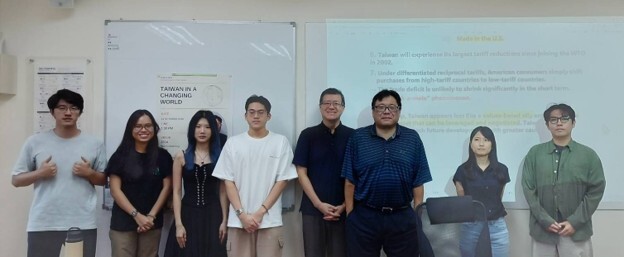
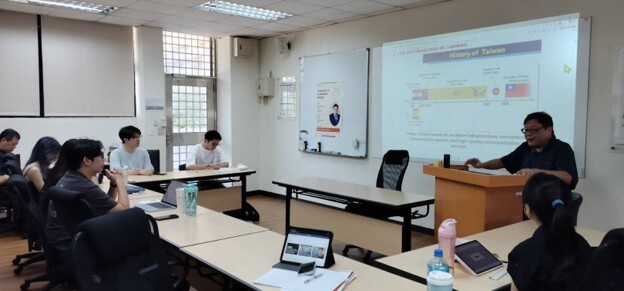
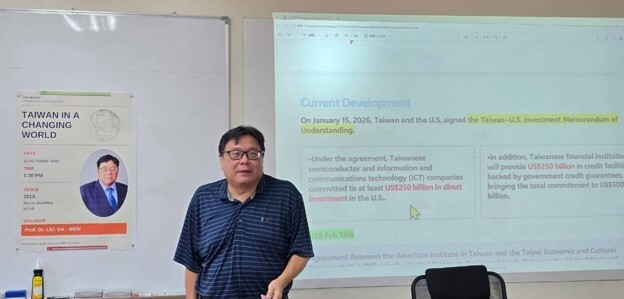
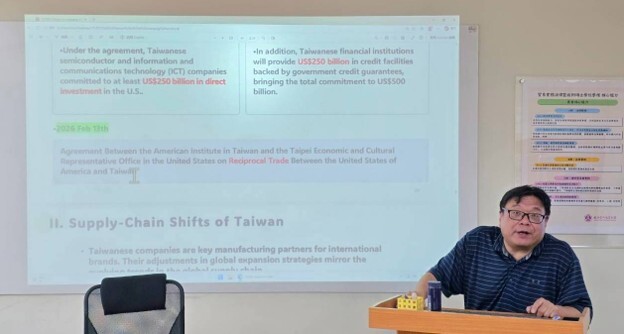
Today MLNGT welcomed Dr. Da-Nien Liu to deliver a talk on Taiwan in a Changing World. Dr. Liu examined the U.S. trade deficit, American tariff policies, Taiwan’s growing trade surplus with the United States, and the strategic importance of Taiwan’s semiconductor industry. Professor Lau emphasized that international trade is influenced not only by economic factors but also by global supply chains, geopolitics, and national security concerns.
A major topic was the persistent U.S. trade deficit. The Trump administration has attempted to reduce this deficit by targeting countries with large trade surpluses. However, these efforts are complicated by the movement of production across countries. Although China’s surplus with the United States has declined, some Chinese companies have relocated production to countries such as Vietnam and Mexico, causing those countries’ surpluses to rise. Professor Lau compared this situation to a game of “whack-a-mole,” illustrating how interconnected supply chains make it difficult for the United States to reduce its overall deficit.
Taiwan’s trade relationship with the United States has also become increasingly important. Taiwan exports high-value products such as semiconductors, chips, servers, and telecommunications equipment. These exports contribute significantly to Taiwan’s economic strength but also attract greater attention from U.S. policymakers.
Future trade negotiations may require Taiwan to purchase more American goods, increase defense spending, and open its domestic market to U.S. automobiles, agricultural products, and health-related foods. While these measures could strengthen Taiwan-U.S. relations, they might also create challenges for Taiwan’s local industries and economic development.
Dr. Liu also highlighted Taiwan’s leading position in the global semiconductor and ICT industries. Taiwan expertise in chip design, wafer manufacturing, packaging, testing, and server production. Because semiconductors are essential for artificial intelligence, telecommunications, electronics, and data centers, Taiwan has become strategically important to both the United States and the global technology sector. Nevertheless, changing tariffs and supply-chain policies could threaten Taiwan’s competitiveness and economic security.
In conclusion, Taiwan must carefully balance its close relationship with the United States and its significant trade interests with China. To remain resilient, it should diversify its markets, strengthen international cooperation, and protect its technological advantages.